Short answer: Stump grinding uses a carbide cutting wheel to turn a stump and its root flare into chips, 15 to 30 cm below grade, so the spot can be re-turfed, replanted or built over. Most Fraser Valley stumps cost $100 to $500 to grind, and a typical residential stump takes under an hour.
Why Bother Grinding a Stump?
A stump grinder chews the stump and its main root flare into chips, taking the wood 15 to 30 cm below grade in a standard grind. It is the difference between a removal and a finished yard. Left alone, a Fraser Valley conifer stump does not disappear on any timescale that helps you: cedar in particular is famously rot-resistant (that is why it is fence-post wood) and a big cedar stump will still be sitting there, sound, in twenty years. Meanwhile it:
- Blocks mowing, landscaping and any future use of the spot
- Hosts carpenter ants, which happily commute from stump to house
- Sprouts suckers for years if it is a cottonwood, cherry or willow
- Grows a skirt of fungal fruiting bodies as the roots decay
- Becomes a trip hazard as the flare wood softens unevenly
- Signals "deferred maintenance" to every future buyer who walks the yard
Grinding removes all of that in under an hour for a typical stump, and the ground can be seeded or sodded the same week.
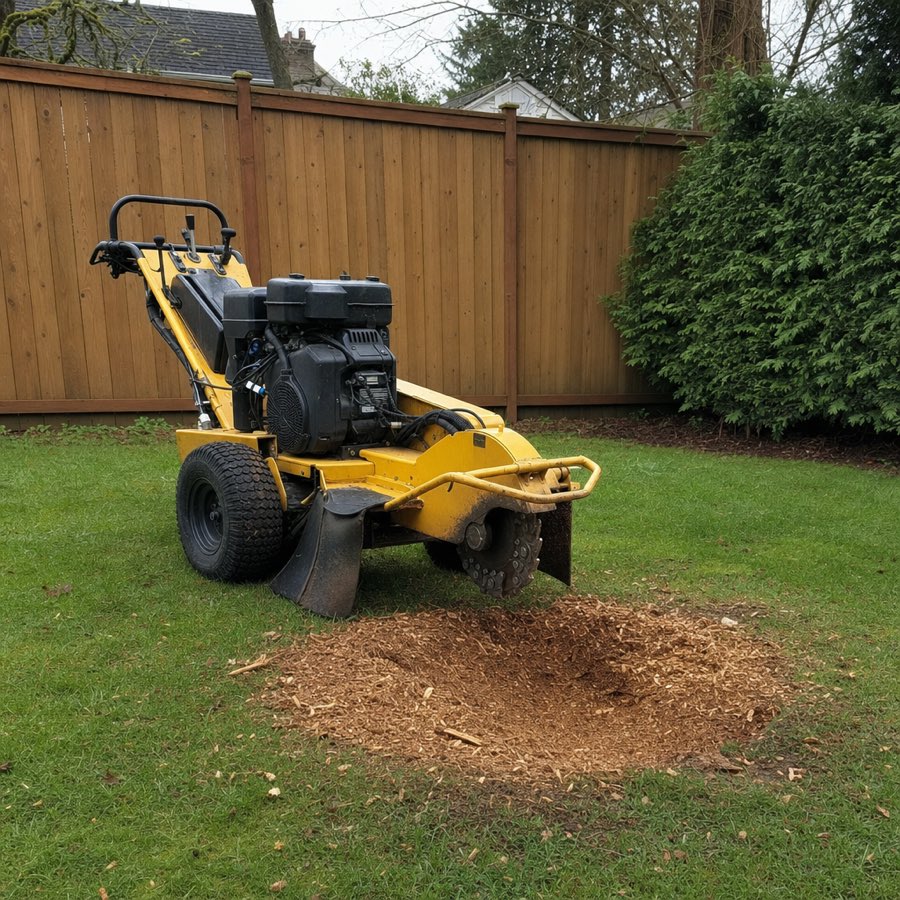
How Does Stump Grinding Work?
A carbide-toothed wheel sweeps across the stump in passes, turning wood into chips down to 15 to 30 cm below grade. A typical residential stump takes well under an hour, start to raked finish.
- Utilities check. We confirm what is buried near the stump: irrigation, lighting wire, septic and drain lines, and we arrange BC 1 Call locates where the stump sits near buried services.
- Setup and guarding. The machine is positioned and the area screened. Grinders throw chips hard, so windows, cars and bystanders are shielded and cleared.
- The grind. A carbide cutter wheel sweeps across the stump, milling it down in passes, 15 to 30 cm below grade for a standard grind, deeper on request for construction or replanting.
- Surface roots. Prominent surface roots (the lawn-lifting kind that big maples and firs put out) can be chased and ground as an add-on so the whole area finishes flat.
- Backfill and cleanup. Grindings are raked back into the hole and mounded slightly to allow settling, or hauled away if you prefer clean soil in the spot. The lawn gets raked and blown.
How Much Does Stump Grinding Cost?
Most Fraser Valley stumps run $100 to $500 to grind, with very large cedar and fir stumps above that. Diameter at the ground is the main driver, then access and how deep you need it.
| Stump size (diameter at ground) | Typical range |
|---|---|
| Small, under 30 cm | $100 to $175 |
| Medium, 30 to 60 cm | $175 to $300 |
| Large, 60 to 90 cm | $300 to $500 |
| Very large cedar and fir stumps, 90 cm and up | $500 to $800+ |
Those are typical Fraser Valley ranges, not quotes: hardness of species, access, depth requested, and surface-root work move the number. Two things reliably save you money. First, grinding multiple stumps in one visit costs much less per stump than separate trips. Second, booking the grind together with the tree removal means the crew cuts the stump low and clean for the machine, which grinds faster.
Should You Grind the Stump, Dig It Out, or Wait?
Grind it in almost every residential case. Excavation is for building sites where the whole root ball has to leave, and waiting for a stump to rot out takes years and invites carpenter ants.
Homeowners sometimes ask about yanking the stump out with an excavator. Excavation removes the whole root ball, but it destroys the surrounding lawn, costs more, leaves a crater needing truckloads of fill, and on tight lots it simply is not possible. It makes sense during lot clearing and construction, where the ground is being reworked anyway. For a finished yard, grinding wins on cost, speed and mess. Chemical "stump removers" and the burn barrel are the third option people try; on rot-resistant cedar they achieve roughly nothing, and open burning of stumps is restricted or banned in Fraser Valley municipalities.
Can You Grind Old, Huge or Multiple Stumps?
Yes to all three, and multiples in one visit are the cheapest way to buy stump grinding.
We grind more than fresh cuts. Old grey stumps from removals done years ago, rows of hedge stumps after a cedar hedge removal, orchard rip-outs on hobby farms, and the massive springboard-notched relics of the valley's original logging that still sit in Mission and Chilliwack backyards. The very biggest old-growth stumps sometimes make more sense to grind flush and landscape over rather than chase metre-deep wood; we lay out both options and prices on site.
On acreages we also handle volume: post-clearing stump fields, windbreak renewals and driveway widening projects where a dozen or more stumps come out in a day with the right machine. If you are between "a stump" and "a field of stumps," the per-stump price drops fast with quantity, so quote the whole job at once.
Stump Grinding FAQs
How much does stump grinding cost?
Most residential stumps in the Fraser Valley cost $100 to $400 each to grind, based mainly on diameter, with big old-growth-size cedar and fir stumps running $400 to $800. Multiple stumps on one visit are cheaper per stump because the machine is already there, and we quote the exact total before starting.
How deep do you grind a stump?
Standard grinding goes 15 to 30 cm below grade, which is enough to re-turf, replant shrubs and garden over the spot. If you are pouring concrete, building a shed or planting a replacement tree in the same hole, tell us and we grind deeper where the machine and roots allow.
Can you get a grinder into my backyard?
Usually yes. Our compact machines fit through standard gates around 90 cm wide, and larger self-propelled units handle slopes and rough ground on acreages. Truly landlocked stumps behind additions or in tiered gardens can often still be done with smaller equipment, so send a photo and we will tell you straight.
What happens to the wood chips from grinding?
Grinding produces a mound of wood chips mixed with soil, usually two to three times the visible stump volume. We can rake them back into the hole and mound them to settle, spread them as mulch, or haul them away for an added fee. Backfilling with the grindings is the standard, cheapest option.
Will grinding stop the tree from growing back?
For conifers like cedar, fir and hemlock, yes: they do not resprout from roots, so grinding the stump ends it. Some broadleaf species (cottonwood, poplar, cherry, willow) can send up suckers from roots left in the soil, and we will tell you if your species is one of them and how to manage regrowth.
Do you need to know where my utilities are?
Yes, and this matters. Before grinding we confirm the location of shallow services: irrigation lines, landscape lighting, septic lines and drain fields on rural properties, and anything close to gas or other buried utilities gets a BC 1 Call locate first. Grinding is quick; repairing a nicked gas service is not.